The habits a brand forms early are the ones it keeps.
A puppy is cute and forgiven for everything, chewed shoes included. Then it grows into a big dog with whatever habits it picked up in the first few months. Young brands are the same. Set the right habits while the brand is small, with tools the whole team can actually use, and a short induction for every new hire.
Often it's the founder who makes the first sales deck. It's quick and it works, so it becomes the template for every deck after it. A new hire needs the logo, so they screenshot it off the website. The trade-show banner gets done in a hurry by the printer's in-house designer, using whatever file they were sent. Then a second office opens, or the business moves into a new market, and someone there makes their own version because nobody told them where the original lives.
At five people nobody notices. At fifty it's how the business looks, and fixing it by then can often turn into a rebrand.
In the early days inconsistency feels harmless, even charming. The founder's energy carries the brand, and everyone knows what the business stands for because they sit in the same room. That closeness doesn't scale. The first hire who wasn't there at the start takes their cues from whatever's in front of them. If the logo file lives in someone's downloads folder and the colour palette is "whatever looks about right", that becomes the standard by default.
Most startups wait until they're big enough for brand guidelines, and that's backwards
The cheapest time to build brand discipline is before there's anything to undo. Most founders assume brand guidelines can wait until there's a marketing team and enough people for things to go wrong. By then the sales deck has been copied and edited so often that nobody knows which version is the master, and the tone of voice belongs to whoever wrote the last email.
Not everybody needs a style guide...
A style guide is the rulebook for designers. It explains things like the clear space around the logo and the hierarchy of typefaces, and most of your team will never open it.
But everybody needs a brand pack?
Your brand pack is a set of ready-to-use templates, logo files and words that everyone else reaches for. A presentation template that's already set up and an email signature that installs in one click do more for brand consistency in a young business than any PDF of rules. So does a two-sentence description of what you do that anyone can copy.
Pair it with ten minutes of brand training in every new hire's first week. Keep it practical. Show them where the logo lives and which template to open for which job. If the tools are easy to find and quicker than starting from scratch, people will use them. If they're not, people will improvise.
The discipline sticks when the team wants it
Placewell was founded in 2023 with a big vision: to become the premier creator, owner and manager of thriving residential and mixed-use communities in the United States and Australia within five years. The brand had to carry that ambition from the very beginning, so we designed it with the gravitas and scale of the company Placewell intended to become. We helped with the trademark application before defining any of the visual elements, then built the identity on geometric shapes set on a grid, each one a nod to the different facets Placewell brings to a community, with vibrant colours to carry its purpose and personality. The promise behind the name is "creating places where people thrive."
The team genuinely loved it. Before long the brand was turning up on high-vis uniforms, caps, water bottles and neon signs. Nobody had to force the rollout. Staff wanted to use it.
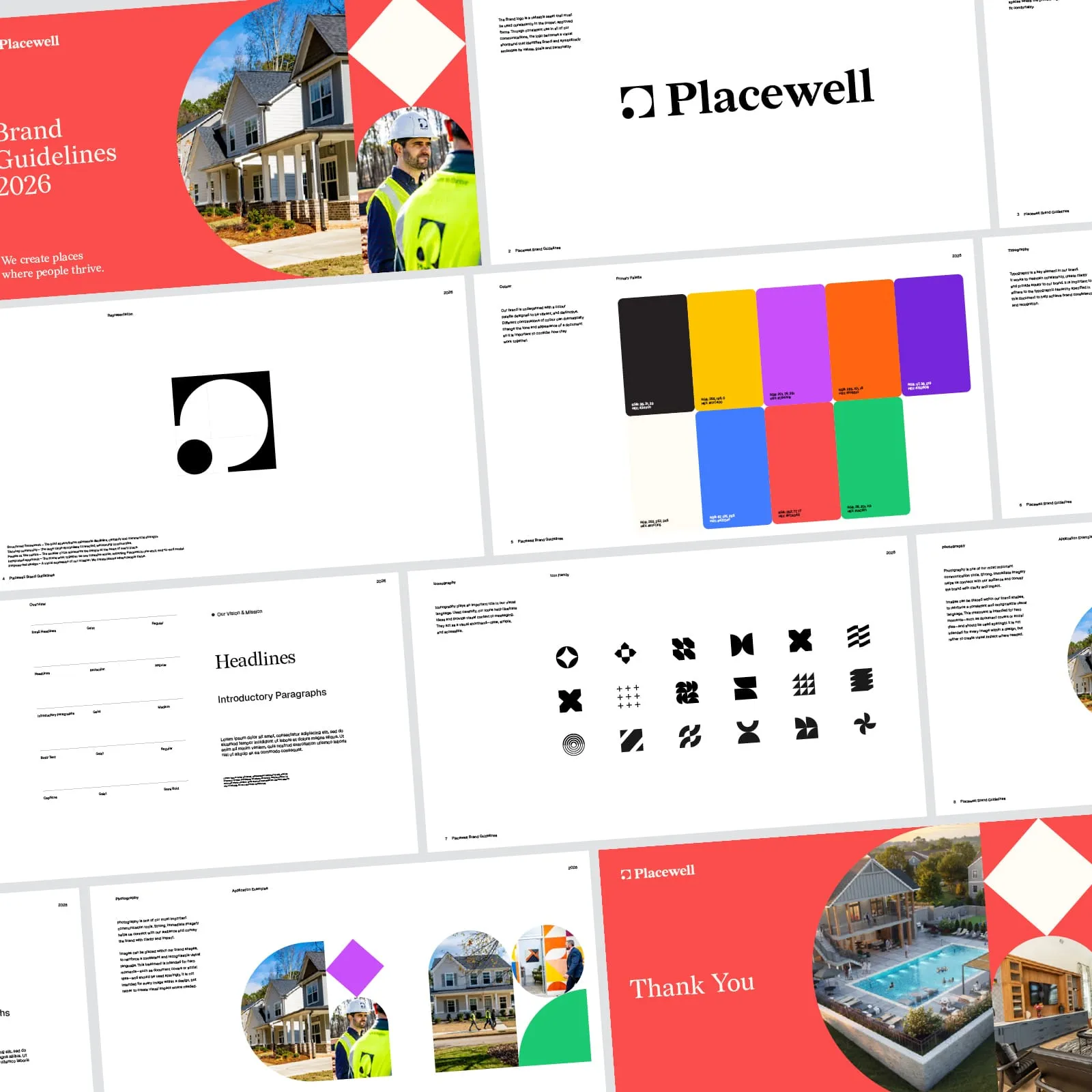
That's the puppy raised right. The groundwork was done first, and the brand was built for the size the business was heading towards. Discipline in a young brand lasts when people choose it, and they choose it when the right thing is also the easy thing. Policing a team of fifty into using the correct logo is exhausting. Handing a team of five a brand they're proud of, and the files to use it properly, is far less work.
Startup branding that works needs someone to be deliberate early, while the habits are still forming, and to make sure everyone knows where the tools are. A big budget and a thick manual are optional. Leave it, and the brand grows up with the stretched banner logo and the colour that looked close enough on someone's laptop.
The brand you set up in the first year is the one that turns up on a hi-vis vest on a job site five years from now. With the right habits, it'll look exactly as it was meant to.