A: You attract the right audience by going to where they already are: the searches they type, the place they're standing in and the point of the decision they've reached. Then you build the site around what they're trying to do, instead of chasing more traffic and hoping the right people happen to be in it.
A predator doesn't wait in the open for dinner to wander past. It goes to where the herd drinks and closes the distance. Websites that convert work the same way.
Someone is sitting in a car park, phone in hand, typing a product name plus "near me". They've already decided what they want and they're only looking for where to get it. If your site isn't built for that search, you're not in the hunt. Meanwhile another business has a homepage written for the board, full of mission statements and corporate language, while the customer scrolls past looking for a price or a way to book. The gap between what the visitor needs and what the page offers kills the sale before anyone picks up the phone.
Then there's the site that ranks for a broad term and pulls in thousands of visitors who were never going to buy. The traffic looks great in the report, and very little of it turns into an enquiry. And somewhere in that crowd is the person who has already made up their mind, lands on your site and can't find the one page that would let them book or visit. They leave, and you never know they were there.
Proximity builds conversions. The closer a page sits to what the visitor is actually trying to do, and where they're doing it, the more likely they are to act. That comes down to the search they typed, the intent behind it and how far along they are. Good websites have pages that meet those moments, rather than one page trying to serve every possible visitor at once.
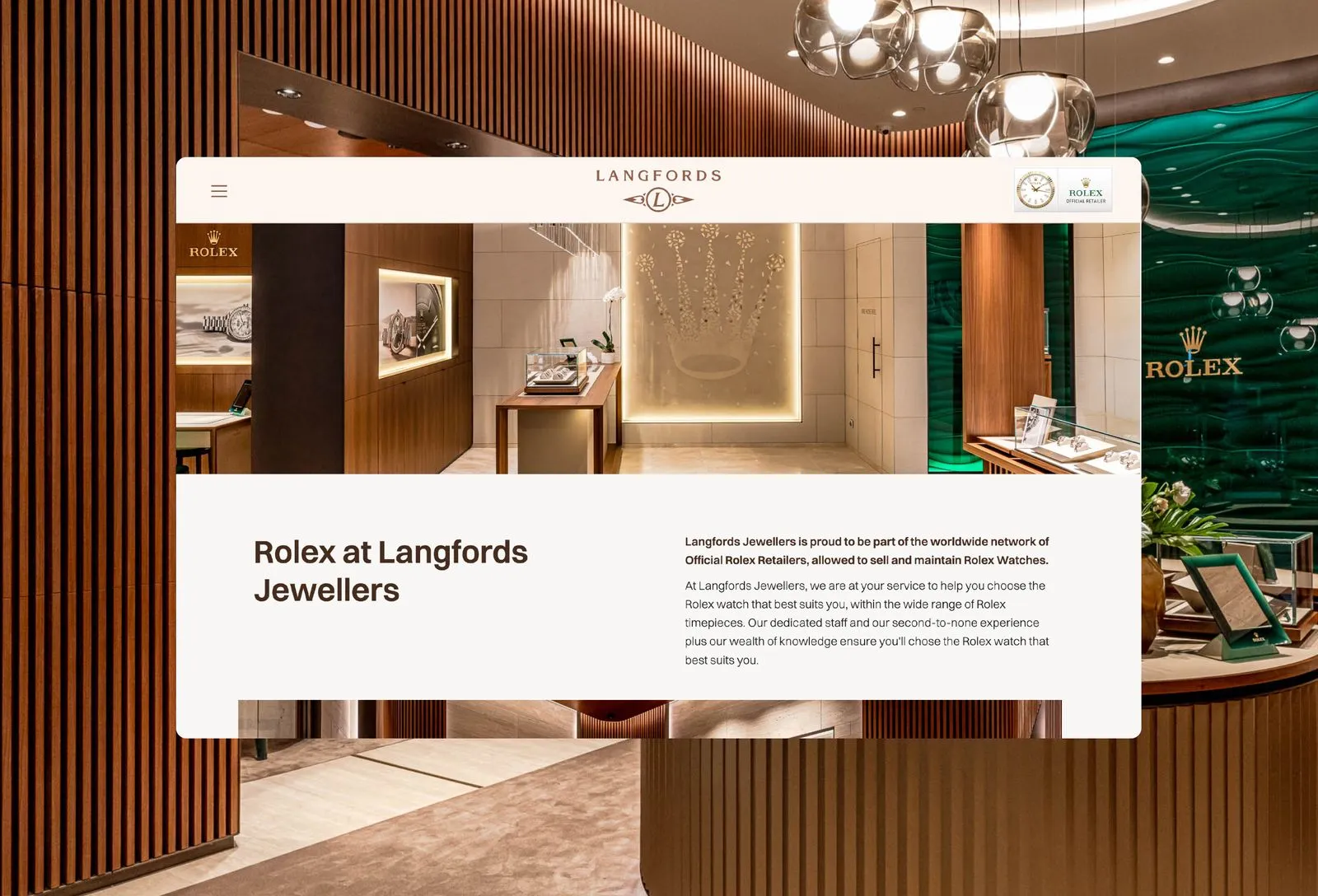
We've worked on the Langfords Jewellers brand for over 25 years now (starting with Simon redesigning their logo as a uni student) and we're proud that the brand has stood the test of time. Langfords is an Official Rolex Retailer, and that brings a paradox most websites never face. Plenty of people search for a Rolex. Very few will walk out of the boutique with the model they want that day, because demand for the most sought-after watches runs well ahead of supply. A site that pulls in thousands of eager visitors and then shows them nothing they can take home only adds to the frustration.
Turning web traffic into foot traffic
The only thing missing from the Langfords website is the 'buy now' button. Being that the product is Rolex, that's not on the agenda. Instead the goal is for customers to engage in person. Serious buyers end up walking into a Langfords boutique to register an Expression of Interest while the tyre kickers carry on. Creature helped Langfords to setup a bespoke EOI database that matches patient customers with their dream watch. Langfords never knows which Rolex models will be in the next shipment, so when the right piece arrives, Langfords can go straight to the customers who have been waiting most patiently. More often than not that results in a sale years after their initial enquiry.
The website can't promise stock, it can't sell online, it can't show RRP to anyone outside of Australia, and so its job is to be the local shop window, and find the people who are genuinely in the market, pull them in through the door, and keep them looking until their watch turns up. Success looks like a list of patient, serious buyers, each one waiting on a watch that hasn't landed yet.
View the Langfords Jewellers case study
More traffic is usually the wrong goal
A smaller audience that's close to buying is worth more than a big one that isn't. That's an uncomfortable position to hold when the monthly report shows visitor numbers going down, but it's the right one. Sometimes the best call is to stop chasing a keyword, or to cut a page altogether, because it brings in the wrong people. You lose a nice-looking number and you gain enquiries from the people who matter.
Good digital targeting means being in the right place when the right person is ready. A visitor who types your product name plus a suburb is far closer to buying than a thousand people who searched a category term while they were still researching or just killing time on the couch. UX intent should shape the page around that. If the visitor is ready to act, let them act without hunting for the button. If they're still weighing it up, give them what they need to decide, and if a page exists only to catch people who'll never be customers, ask whether it should exist at all.
Answer engine optimisation is the new waterhole
More and more, the place your audience already is happens to be an AI assistant. The herd is gathering somewhere new, and that's where a smart brand should be circling. People now ask ChatGPT, Google AI and similar tools which business to use, and the assistant replies with a few names instead of a page of links. Answer engine optimisation (AEO) is the work of making sure your brand is one of those names, and that what the assistant says about you is accurate.
Most of it starts on your own site, with plain answers to the questions buyers actually ask and facts about your business that match everywhere else they appear. On 10 November 2026 OpenAI introduced Businesses in ChatGPT, a beta that lets a business claim its profile, keep its details current, add product information with pricing and availability, plus see insights such as mentions and website clicks. OpenAI says 1.2 billion people use ChatGPT every week. Eligibility is still rolling out by business type and country, but the waterhole is open and most brands haven't turned up yet.
If you need help with AEO including claiming your ChatGPT business profile, talk to Creature.
The site that converts is already close
Most websites are built to be admired by the people who paid for them. The ones that work are built around where the audience already is and what they're trying to get done on that particular afternoon. A lion lying in the long grass by the waterhole doesn't need to sprint across the plain. Get your website that close to your buyer, whether they're typing into a search bar or asking an AI assistant, and the chase mostly takes care of itself.