Some of it, sure... doing certain parts yourself can save real money without hurting anything. But the parts buyers judge you on first, above all the website and hero imagery, usually come out weaker when they're done in-house. That just weakens the brand you've just paid good money for.
An agency can create a strong brand vision, but it'll remain a vision if it's not implemented well.
Imvelo helps mining companies make high-stakes decisions with more certainty, backed by a team of really intelligent humans and their own scenario modelling platform. When they came to us they were already winning tier-one mining clients on the strength of their work alone, the brand just hadn't caught up.
We rebuilt the identity from the ground up, with a new logo, brand guidelines, messaging and a direction for where their website should go. "Clarity. Delivered." became the heart of the brand, because it covers both sides of what they do: making sense of a complex decision, and having the practical experience to make it work on a real mine. The website direction we designed put real people inside the brand's shapes, under headlines like "Mining solutions made with smart technology and smarter people". The idea was simple. A business built on its people's judgement should show those people.
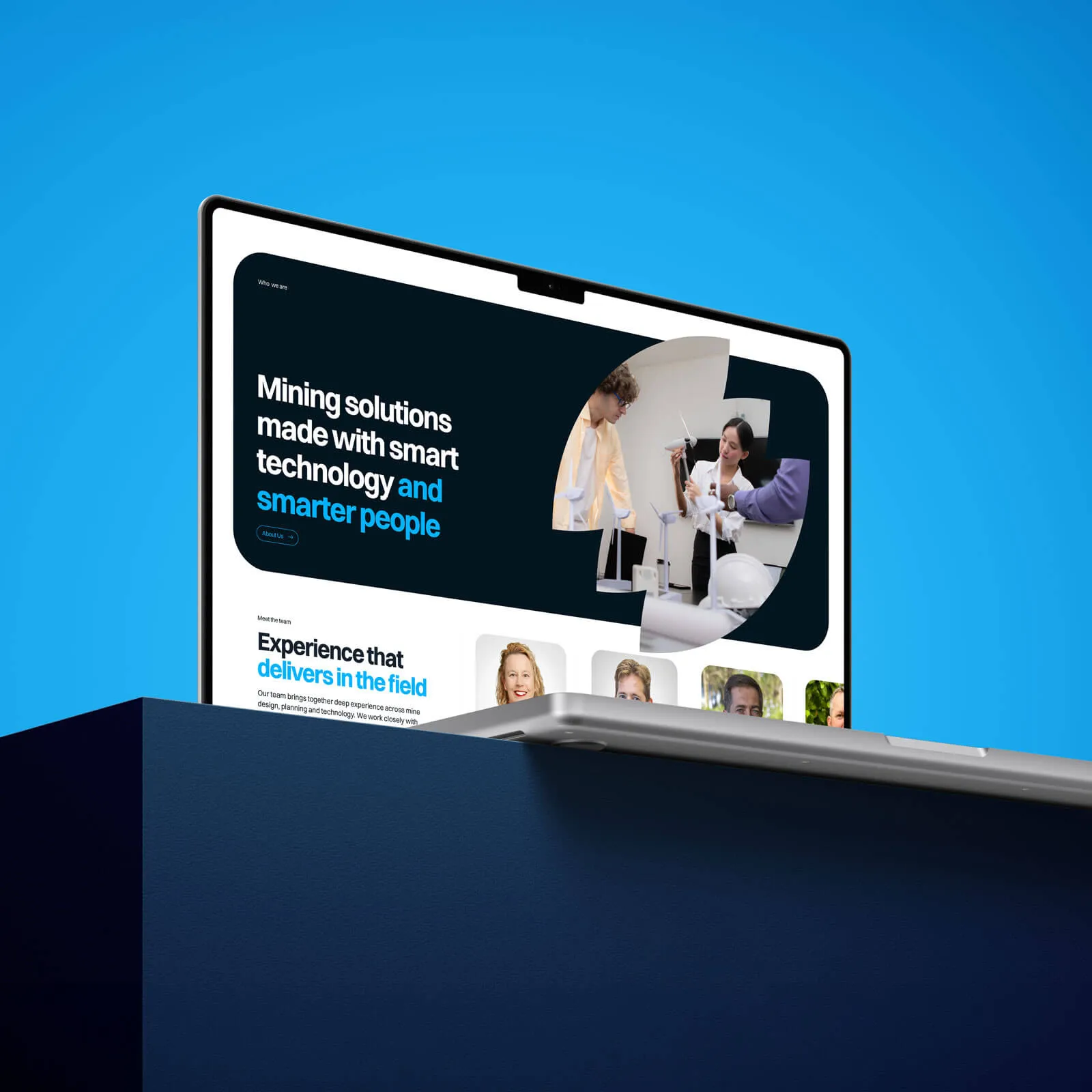
When it came to implementation, Imvelo decided to go it alone and build in-house. It's an understandable call. They're a capable business full of smart people, and keeping the work inside looks like the efficient option. But ultimately their brand is nowhere near as strong as it could be.

Unfortunately we're seeing this happening more often now that DIY tools and AI capabilities are in play. A business invests properly in strategy and identity, then saves on the part where the brand meets its buyers, and the result too often lands somewhere short of what everyone was aiming for.
Remember that AI is inherently average
An AI image generator works from everything it has already seen, so when you ask it for a mining scene it gives you the most stereotypical one it can produce. That's useful if you want something that looks like mining, but it's a problem if you want it to look like you. Branding exists to make you recognisable as yourself, and the 'average' of your category is the one look nobody recognises. The same goes for AI-written headlines, which drift towards the phrases every competitor already uses.
AI can be a good tool in skilled hands. The trouble starts when it stands in for the judgement about what this particular business should look and sound like, because that judgement is the part you paid the agency for.
Spend where buyers look first
There's plenty of brand rollout you can do yourself. Applying the new templates to proposals, slide decks and email signatures is safe, because the rules are already set and a capable team can follow them. Running social posts from a template kit your agency has built works for the same reason. You can roll the brand out in phases as old stationery and signage run out, and you can shop around for printing. None of that changes how the brand looks, so the savings are real and nobody outside the business will notice the difference.
The website and the imagery are another matter, and so are the main headlines. These are judgement calls, made fresh every time, and they're where a buyer forms a first impression. A template site can tick every technical box yet still not carry the personality of your brand . Stock or generated photography can be technically fine too, yet say nothing about the people who do the work. These are places where we see small savings quietly undermining the larger brand investment.
This is an awkward article for me to write, because no matter how I write it, it will sound like an agency asking for more work. Truth be told we are so happy for our clients to do powerpoint and word documents galore, we just draw the line at logos, hero imagery, key brochures, advertising and websites.
A brand is what your buyers actually see, and a logo file sitting in a shared drive doesn't do much on its own. If the strategy and identity end up applied through generic imagery and borrowed copy, you've paid for the thinking and then kept it out of sight. The investment is only half realised.
If you're about to roll out a new brand, you're standing at the water's edge with a horse that's ready to drink. Do the easy parts yourself, and keep the money for the place it actually drinks: the website and the imagery your buyers see first.